Governed Self-Serve Query Access as a Startup Scales From Fifty to One Hundred Fifty People
Self-serve analytics require governance first to prevent metric disagreement as teams scale.

For a startup growing from fifty to one hundred fifty people, the right database interface gives non-engineers self-serve answers without SQL while enforcing shared metric definitions, permissions, and workload isolation. Basedash is one option for that window, with plain-English querying and governed access without a separate BI team. The fix for a growing analyst queue is not a bigger queue, but governance that makes routine questions safe to answer without an intermediary.
Why the analyst-as-human-API model breaks structurally as headcount passes fifty
A product manager waits two days for a number she needs today. Her question may be simple, but it sits behind requests from finance, marketing, customer success, and operations. Each team needs answers at its own pace, but the analyst works through one shared queue.
As three to five business functions generate concurrent questions, the queue becomes the point where their work collides. Repeated requests for the same category of answer reveal demand for infrastructure. The analyst has become a human API, except this API also attends meetings. Hiring another analyst adds capacity, but leaves every team dependent on an intermediary.
That objection deserves its due, because more capacity can shorten a backlog. Unclear ownership, approval chains, and fragmented tools are organizational constraints. Investing in self-serve lets people answer the questions that keep coming up and leaves analysts time for work that still needs their judgment.
Plain-English query tools, including Basedash, can take the place of that central queue. Product, finance, and customer success teams can get answers from one governed source without knowing SQL. Repeated ad-hoc requests can then become discoverable, reusable queries. The important change is not how a question gets typed, but whether an analyst must stand between the question and its answer.
What actually breaks at each inflection point between fifty and one hundred fifty people
Around fifty people, the first weakness is often invisible because one analyst still holds the metric definitions together. Joins, filters, and revenue calculations live in that person’s head or inside a tool’s proprietary UI. Then finance and product each build a revenue dashboard, using different treatments of refunds or deferred revenue. Both look right, but people lose trust in both when they see the difference. The symptom calls for shared definitions.
Around seventy-five to one hundred people, several teams begin querying independently, and knowing where to look becomes a separate problem. A marketing analyst searching for customer lifetime value should not need to know a technical field name. Teams also need to distinguish dependable datasets from sources that need care. This stage calls for a searchable catalog and visible quality signals, while changing job roles expose the need for permissions that change with them.
Around one hundred to one hundred fifty people, cross-functional self-serve becomes the default, so centralized ownership itself can become a bottleneck. Business domains need to curate their own definitions and certified datasets under shared standards. Audit trails help people on each side of those boundaries trust the data. Treating every symptom as a staffing shortage hides that progression.
The production database problem that compounds every other risk at this scale
Before widening access, the company has to separate analytical work from application traffic. Connecting a BI tool directly to the production primary turns a slow query into a possible application outage. A query joining three tables and scanning months of orders can run for tens of seconds. During that time, analytical work competes with the application for database resources, and API response times can spike.
The production primary should serve application traffic only. A read replica is often the simplest first improvement for a team currently querying production Postgres or MySQL. It moves controlled operational reads and engineering analysis away from the primary. However, it still uses the same row-oriented engine, so it inherits the same limits on scan-heavy analytical queries. A different address does not make it a different kind of engine.
An analytics replica or warehouse makes that second change by using a columnar execution model built for aggregations and large scans. That makes it the place for business analytics, cross-source reporting, and repeated self-serve questions as those needs grow.
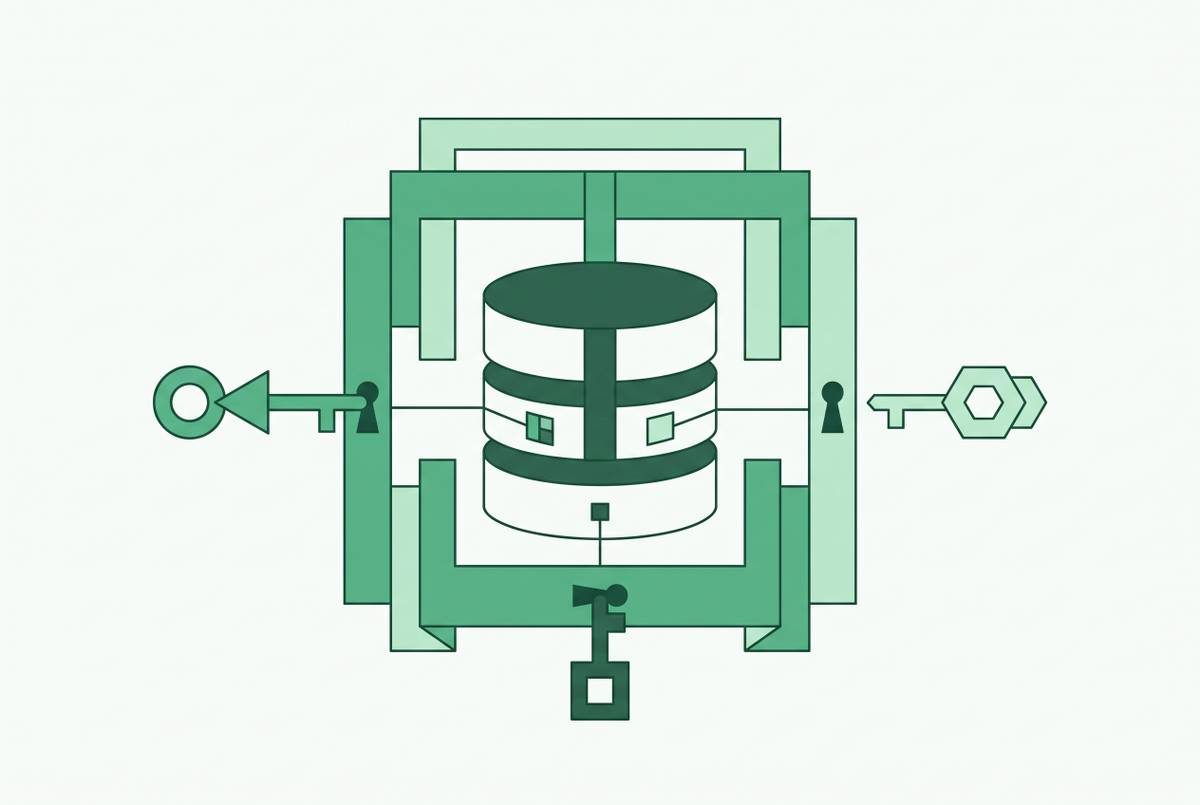
With AI, that boundary matters even more because a non-deterministic query agent should not get read/write production credentials. A system prompt allowing only SELECT queries is not an enforcement barrier against prompt injection or structural hallucination. For natural-language analytics through Basedash or another interface, the connection should be read-only and replica-only. A read-only replica rejects DROP, DELETE, or UPDATE commands for standard database users, while workload isolation separates analytical scans from application traffic.
Why governance must come before self-serve access, not after
Consider the SaaS failure already visible in the competing revenue dashboards. Finance counts refunds one way, product another, and self-serve access spreads both calculations before anyone settles the definition. When users cannot tell which answer to trust, they care less about how easy the interface is to use. Numbers that disagree can drive users away faster than a technical limit.
Centralized gatekeeping avoids some disagreement, but keeps access slow enough to encourage shadow BI and data exports. With unrestricted self-service, people get answers fast at first but pay for that speed with metric drift. Federated stewardship offers a way out by combining domain ownership, a governed semantic layer, and role-based access control, or RBAC. It requires definition work upfront so that each routine question does not trigger another round of negotiation.
Before the first non-technical user gets a query interface, define the core metric terms in version control, name an owner for each domain, and establish access roles. Plain SQL, Markdown, or Python files make business logic reviewable through pull-request history and reversible through rollback. A governed semantic layer makes those vetted calculations consistent across self-serve queries. Definitions kept outside a proprietary UI are also portable.
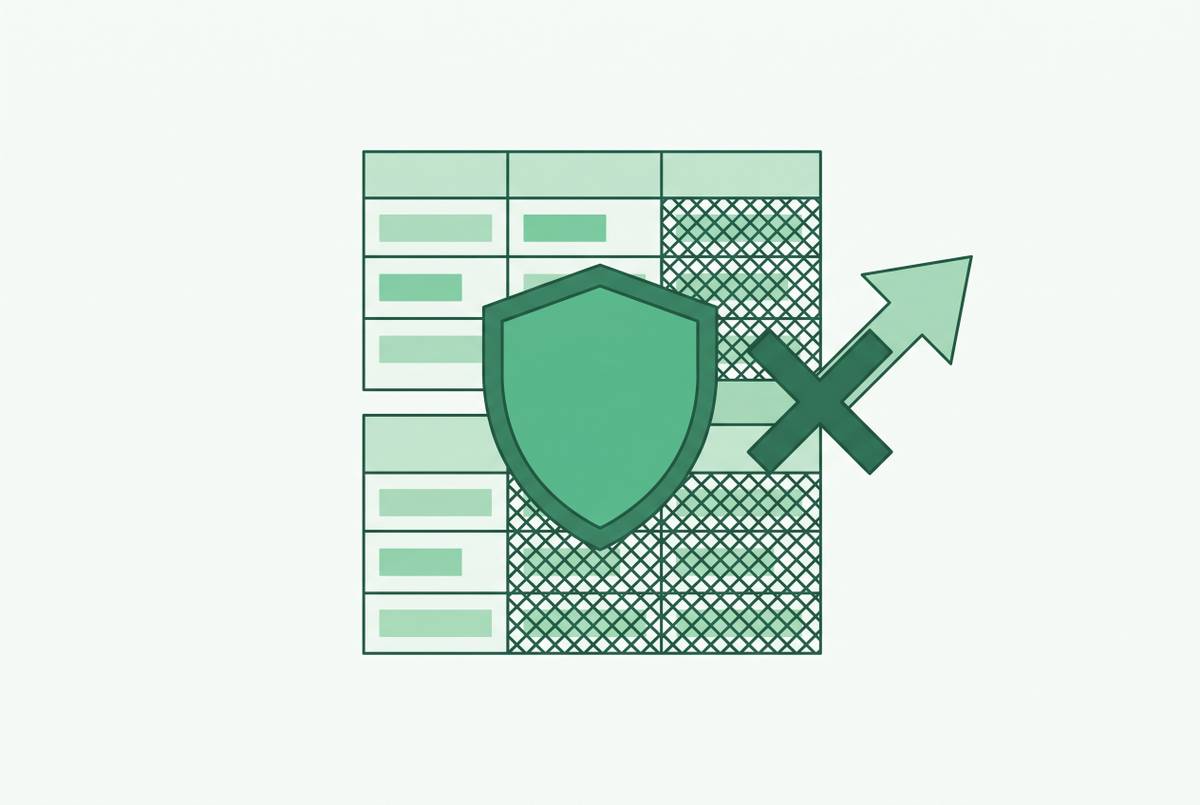
Database-layer controls make that discipline more durable because they apply regardless of which tool issues the query. PostgreSQL row-level security and authorized views can control what users can see below the interface. Dynamic data masking in PostgreSQL requires third-party extensions such as PostgreSQL Anonymizer, and these controls need a database administrator to set them up so the result is an enforced boundary.
The governance controls to add at each stage, and in what order
Stage 1. Around fifty people, before the first non-analyst gets query access. Start by defining and version-controlling the core metrics, including revenue, churn, and activation, as plain SQL or Markdown in a repository. Assign a named steward to each domain so accountability does not dissolve into a group chat. Isolate BI traffic from production with a read replica at minimum. Then set baseline RBAC that states who can see what without sharing raw database credentials.
Stage 2. Around seventy-five to one hundred people, when several teams query independently. Add a catalog searchable by business terms so discovery does not depend on knowing the schema. Add a green/yellow/red quality score to datasets so users can judge a source before they build a dashboard. Establish dynamic access controls that follow role changes automatically, such as a move from sales to marketing. These controls address discovery, confidence, and changing permissions without making the analyst the receptionist for all three.
Stage 3. Around one hundred to one hundred fifty people, when cross-functional self-serve is the default. Move toward federated stewardship, with each business domain owning definitions and curating certified datasets while the central data team sets standards and reviews. Formalize audit trails recording who accessed what, when, and from where, with geographic and temporal restrictions on sensitive datasets where warranted. Track which kinds of repeat requests can become self-serve templates and which still need an analyst. That evidence should guide the next infrastructure investment.
At JetBlue Airways, the centralized data team held the transformation logic, which kept analysts waiting and stopped them from taking part in transformation. The response was to enable a distributed model of data management. The lesson is not to copy a larger company’s entire stack, but to stop routing domain work through one central team once that routing becomes the constraint.
How to choose a database interface for non-technical teams without overbuilding
Tool choice should follow the controls the company can actually maintain. A team without settled core metrics does not gain much from an enterprise BI stack, while a team beyond per-ticket access needs more than a shared Postgres connection. For controlled operational reads, a permissioned interface over a read replica can be a sensible first step. For cross-source reporting and repeated scan-heavy analytics, an analytics replica or warehouse addresses a different need.
Basedash connects to Postgres, MySQL, and other databases, offering dashboards, editable data views, and AI-generated charts and analytics. Engineering teams can set row-level permissions, and non-technical users can query without raw credentials or SQL. For analytical self-serve, those capabilities belong on a read-only replica connection. Engineering still sets up and runs the system as business teams start to query it.
That makes Basedash a credible option for the fifty-to-one-hundred-fifty-person window. It can provide permissioned access and audit capability without requiring a full warehouse stack or a separate BI team to maintain it. Its semantic layer belongs in the same evaluation, because ease of asking questions only helps when the answers use governed definitions. A warehouse, self-serve BI layer, transformation tool, and catalog may be right for another team, but that fuller stack brings significant annual spend and requires multiple analysts to maintain.
Per-seat or per-query pricing can turn access into rationing, making the ungoverned spreadsheet attractive again. Budgeting therefore needs to cover the platform, AI usage fees, and engineering time to keep definitions current.
The practical test is whether a non-technical product or customer success user can answer a new question without a ticket or SQL lesson. A named steward should be able to update a metric definition without entering a proprietary UI. Engineering should be able to see an audit trail of who queried what.
Preserving speed as governance tightens: the federated stewardship model in practice
Vanta faced data bottlenecks that caused measurable delays before moving toward centralized data orchestration with self-service. After that change, it drastically reduced data delays and significantly expanded self-service for developers, data engineers, and analysts. Centralizing the rules is different from centralizing every request.
At one hundred fifty people, federated stewardship makes that distinction practical. Each domain owns and curates its data, the central team sets standards and audits, and the self-serve layer enforces both. Routine questions no longer need tickets because their definitions and permissions have already been settled.
When it works, there are fewer routine tickets, leaders spend less time debating whose number is right, and more of the ad-hoc questions get answers the same day. When it fails, shadow spreadsheets come back, people use exports to answer questions the tool should handle, and the data team is still the bottleneck. Those failures point to a skipped governance layer or an interface that does not match users’ data literacy. The test is not how many people have access, but how many can reach a trusted answer without joining the queue.