Saved Query Catalogs for Reproducible Analytical Answers
Shared definitions eliminate conflicting metrics and the trust problems that come with them.
The compounding of the access gap and the definition gap
Two things are true about analytics right now, and they pull in opposite directions.
Access is going up. More people than ever have a login to some kind of BI tool. Self-service adoption keeps climbing as business teams get tired of waiting on IT for a report. That part of the promise got kept.
Access is not the same as answers, though. Plenty of front-line workers with a BI login still can't get to the number they actually need, because the tool hands them a wall of tables and filters instead. Most people are still clicking through pre-built dashboards instead of asking a plain-language question and getting something back. The doors are open. A lot of the rooms behind them are empty.
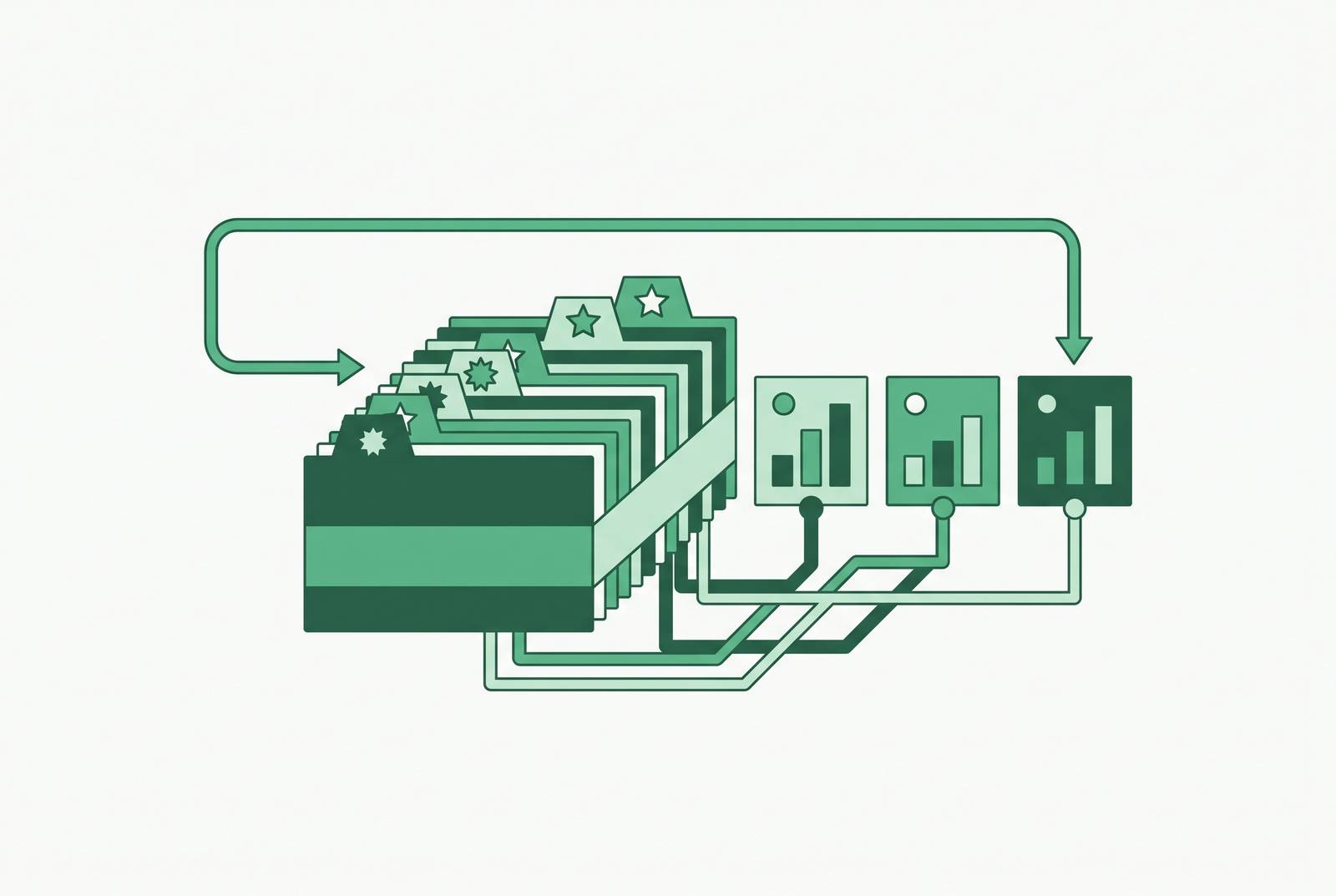
Here's where it compounds. Every new person who gets access is another person who might write their own version of "active users" or "revenue this month." No shared definition means no shared math. Organizations have poured money into the access layer, tools for building your own reports and dashboards, but that spending has not been matched by investment in the cause that actually determines consistency: one agreed-upon way of answering the same question every time. So adoption grows, and the pile of conflicting answers grows right alongside it.
This is the part most companies get backwards. They treat trust in data as an access problem, so they hand out more logins and call it progress. Scaling access without scaling governance doesn't fix the underlying distrust in the data. It multiplies it, because now there are more people generating more versions of the same metric, each one plausible, none of them checked against the others.
Non-technical users don't need more raw access to tables and columns. They need governed access to answers that have already been checked and agreed on. That distinction is the entire reason saved query catalogs exist.
What a saved query catalog is and what it does
A saved query catalog is a library of named, versioned, shared SQL queries that represent an organization's agreed-upon way of answering the questions that come up over and over. "What's MRR by cohort?" "What's weekly active users?" Those get asked constantly. A catalog means the query answering them already exists, already has an owner, and already has a name a normal person would recognize on sight.
A catalog is not a dashboard and it's not a report. It sits one layer beneath both. The query is the artifact. Dashboards and reports get built on top of it, not the other way around.
What separates a real catalog from a folder of SQL files someone saved three years ago and forgot about:
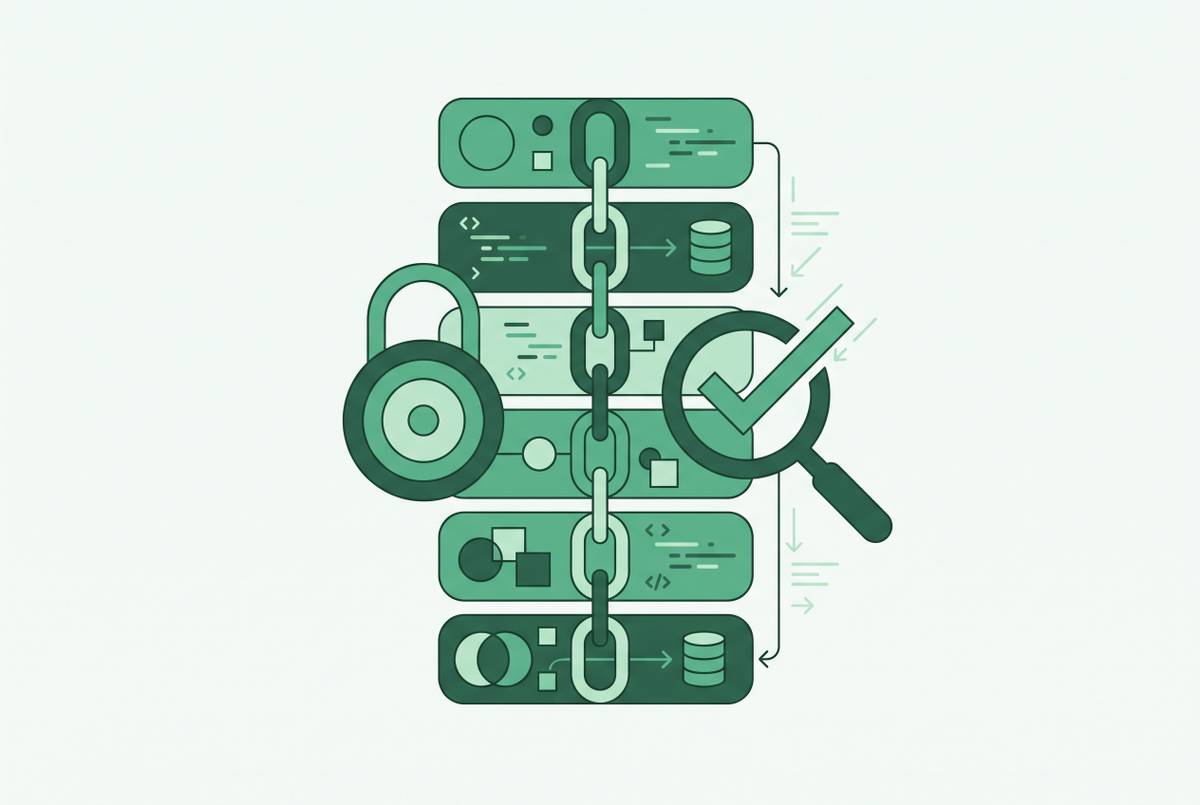
Named. Tied to a business question, like "weekly active users," not a generic filename with a version number.sql`. Owned. Someone specific is accountable for it being correct. Not a team. A person. Shared. Anyone with permission can find it. It doesn't live buried in one analyst's personal workspace. Versioned. Changes get tracked, so when a definition shifts, that shift is visible and intentional, not silent. Permissioned. Who can view it, run it, or edit it is controlled. Not everyone needs the keys to change the definition.
Keep this separate from data catalogs, tools like Atlan, Collibra, Alation, DataHub, or OpenMetadata. Those manage metadata about tables and columns, which shapes the query built on top of it. A saved query catalog sits one layer up from that. It holds the business logic, the actual decisions about what counts and what doesn't, that turns raw tables into a usable answer.
The reproducibility test is simple: the same named query, run by any permitted person, at any time, comes back computed the same way. That's the whole trick. And it usually doesn't live as some separate system bolted on the side. It lives inside whatever BI tool, database GUI, or query layer the team already uses.
The organizational problems a shared query library quietly eliminates
Most of the daily friction around data is a missing-layer problem. It's a missing-layer problem. Here's what that looks like up close:
The analyst bottleneck. Without shared queries, every new question from product, sales, or ops turns into a ticket. A catalog lets people answer known questions themselves. No request filed, no wait.
Metric drift. When everyone writes their own version of "churn rate," the definitions drift apart over months, and nobody can audit it because there was never one canonical version to check against. A catalog fixes that by giving drift something to drift from.
Onboarding overhead. New analysts spend weeks just figuring out which existing queries to trust. A named, owned catalog puts the trustworthy version front and center instead of making people guess.
Untraceable numbers. A figure appears in a board deck and nobody can trace it back, because it was calculated once, in someone's personal notebook, and never seen again. A catalog makes the source traceable, every time.
Reinvention. The same query gets written five separate times by five separate people because nobody knew it already existed. A searchable catalog eliminates that redundant work.
Look at all five side by side and they're the same failure wearing different clothes. Each one comes from the same missing thing: a shared, trusted layer sitting between the raw data and the people asking questions of it.
The catalog's place in the BI and database tool stack
Picture the stack in four layers:
- The production database (Postgres, MySQL, whatever holds the actual rows).
- A database GUI or query tool, where engineers and analysts write and save SQL.
- The BI layer, where dashboards and reports get built.
- A data catalog, where metadata, lineage, and documentation live.
Saved query catalogs live at layers two and three. Not at the raw database, and not at the metadata layer.
Traditional BI tools show different versions of this, with different levels of enforcement. Semantic modeling layers that define a measure once, in code, and version-control it, so every dashboard downstream reuses that same definition, are the clearest example of a query catalog operating at real scale. The measure is the governed artifact. AI features that generate query logic on top of a semantic model are only as reliable as the model feeding them, which is a good reminder that a catalog is only as trustworthy as what's actually inside it.
Lighter tools can run a simpler version of the same idea: a database GUI or internal tool platform with saved, named queries, shared across a team, with permissions controlling who runs versus who edits.
Database-native BI tools, the kind that connect straight to a production database instead of requiring a separate warehouse or a scheduled extract, fit this pattern especially well. The query runs against the live source of truth every time, so there's no stale extract sitting between the answer and reality. Pair that query layer with permissions, dashboards, and editable views, and non-technical people can use the catalog's output without ever touching SQL. The catalog does the work. The interface just hides the mechanics.
The tool a team already has usually decides which version of this pattern is realistic. Bolting a heavyweight semantic layer onto a team that lives in a lightweight database GUI is more setup than most questions justify. Matching the pattern to the layer a team already works in matters more than chasing whichever tool looks most sophisticated.
The governance properties that make a query catalog trustworthy rather than just organized
Organized and trustworthy are not the same thing. A shared folder of SQL files can be perfectly tidy and still be worthless as a source of truth. What separates the two is enforcement.
A few properties do the actual enforcing:
Ownership as a governance primitive. Every query needs a named owner, a specific person, not "the analytics team." Someone has to be on the hook when the underlying data changes and a definition might need to change with it. Versioning as an audit trail. If "active user" gets redefined from one login to two, that change needs to be traceable: who made it, when, and why. Without that, a metric quietly means something different next quarter and nobody notices until the numbers stop matching last year's. A two-tier permission model. Run access, so anyone permitted can execute the query and see results. Edit access, restricted to owners or engineers, so the definition itself can't be casually altered.
Full enterprise data catalog tools, Atlan, OvalEdge, Secoda, and Collibra among them, handle versions of these properties at the metadata and lineage level. They operate above the query layer, and they're built for data teams, not for a sales rep trying to check a pipeline number. For a company around 100 people, an enterprise data catalog is more machinery than the problem calls for. What that size of team actually needs is simpler: clear ownership, sensible permissions, a naming convention people actually follow, not column-level lineage tracking across hundreds of connectors.
There's a sequencing lesson buried in here too, and it's the one most teams skip. Metric definitions, role-based access, audit trails: these need to exist before self-serve analytics opens up to the whole company, not get patched in after adoption has already curdled into distrust. Once people stop trusting the numbers, earning that trust back is a far bigger project than building the governance would have been from the start.
The payoff, when it works, is a flywheel. People learn a named query is owned, versioned, and permissioned, so they use it instead of writing their own version from scratch. Every time they use it instead of reinventing it, the catalog gets a little more entrenched as the one place everyone checks first.
Building a saved query catalog in practice: naming, ownership, and maintenance
Start with an audit, not a blank page. Most teams already have saved queries scattered across tools, personal folders, and old Slack threads. The first job is finding what already exists, not rewriting everything from zero.
Set a naming convention before saving the first query. Names should map to business questions, not SQL syntax: "revenue by plan this month," not agg_rev_plan_filtered. If the team is big enough to need it, namespace by function (sales/, product/, ops/) so names don't collide. A name works like a contract. Change it later and every downstream reference to it breaks, so getting it right early avoids fixing it after the fact.
Assign an owner at creation, not after the fact. Ownership sticks far better when it's a condition of a query entering the catalog in the first place, rather than something bolted onto a pile of orphaned queries nobody claimed.
Set permissions at the query level, not just the database level. Run access can be wide open: product, sales, and ops all benefit from executing catalog queries freely. Edit access should stay narrow, ideally requiring a second set of eyes before anyone changes something that affects a metric's definition.
Build a lightweight change process. When a column gets renamed or a new event type appears in the data, whoever owns a query built on that data needs to hear about it before their query quietly breaks or, worse, quietly returns the wrong number. That notification loop is the maintenance contract holding the whole thing together.
Make it discoverable. A catalog nobody can find has solved nothing. At minimum, it needs to be searchable by business question, team, or metric name. Better still, documentation on what each query returns and when it was last checked.
The most common way this goes stale follows the same script every time: the catalog launches well, gets some real use, and then nobody gets notified when the schema it depends on changes. The fix is connecting the catalog to whatever workflow already tracks schema changes, so an owner gets pinged the moment something they depend on shifts.
For teams working mostly inside a database GUI, saved query snippets are a lighter, earlier step toward a full catalog. They cut down on copy-paste errors and add some consistency. But without ownership and discoverability layered on top, a snippet library is just a head start, and nothing more. It's a head start, and nothing more.
What teams across the organization can do with a reliable query catalog
Once the catalog exists, and people actually trust it, the shape of work across the company shifts.
Product teams can answer retention and engagement questions the moment they come up, no ticket required, because the "weekly active users" query already exists and is already trusted.
Sales and revenue teams can pull pipeline and conversion numbers against one consistent definition. No more arguing in a meeting about whether "closed deal" includes trials, because that decision is already baked into the query.
Support and ops teams can look up account status and usage flags directly, through a permissioned interface that never shows them raw SQL. This is the admin-panel use case: the catalog query is the invisible backend running underneath a simple, non-technical-facing tool.
Marketing teams can pull campaign attribution and funnel numbers without routing through an analyst, confident the definition lines up with whatever finance is using in its own reporting.
The data team's job changes shape too, and this is the underrated part. Instead of writing one-off queries on demand for whoever asks first, the role shifts toward maintaining the catalog and enforcing its governance. That's a higher-leverage job. It scales, unlike answering the same ad hoc question for the fortieth time, which does not. Answering the same ad hoc question for the fortieth time does not.
The growth in self-serve BI adoption reflects a real appetite from business teams to stop waiting on someone else for answers. A catalog is what makes that appetite safe to feed instead of dangerous. It's the difference between self-serve being reliable and self-serve being chaos with extra dashboards attached. And non-technical users never need to see a line of SQL to benefit from any of it. They see a dashboard, a table, an editable record. The complexity stays hidden. The governance that supports it does not keep pace.
Choosing where to implement a query catalog based on your team's actual stack
No single product on the market is called "saved query catalog," ready to buy off a shelf. The catalog is a pattern, and it gets built inside whatever tool a team already uses to manage and share queries.
For teams already running an enterprise BI stack with a mature semantic layer, definitions get written once, in code, version-controlled, and reused across every dashboard built on top. That's about as fully realized a version of this pattern as exists in a traditional BI tool, as long as the underlying model stays disciplined.
For teams without that kind of heavyweight semantic layer, the more practical move is lighter: a database GUI or query tool with saved, named, owned, and permissioned queries, built directly on top of the production database rather than a separate warehouse. That keeps queries close to the live source of truth and gives non-technical teammates a simple, governed way to get answers, without standing up a full enterprise BI implementation just to answer "what's MRR this month."
Reaching for the enterprise catalog tool by default is the wrong instinct for most teams under a few hundred people. It solves a problem they don't have yet and skips the one they do: naming, ownership, permissions, a maintenance habit that actually holds. The right choice comes down to what a team already runs, how many people need access, and how much definitional risk the organization can tolerate before a wrong number in a board deck turns into a real problem. The tool matters less than the discipline behind it.